
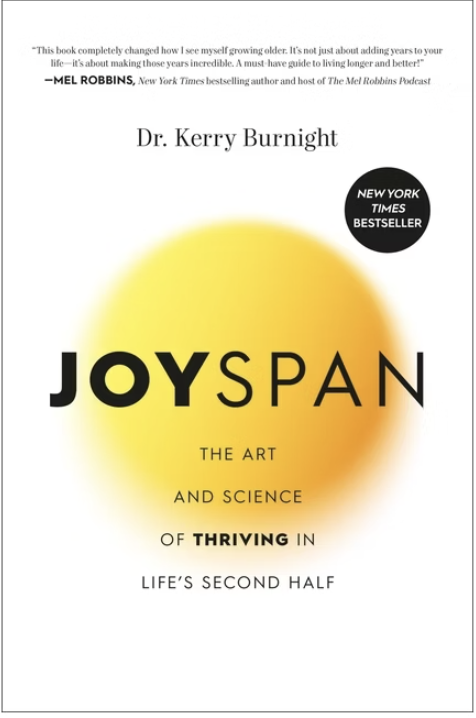
This spring I had the opportunity to speak with Dr. Kerry Burnight, a renowned gerontologist and author of the New York Times bestseller “JoySpan: The Art and Science of Thriving in Life’s Second Half.” She generously agreed to join me on the Wisdom of Impermanence podcast, sharing how to embrace aging as a privilege rather than a decline. Drawing from decades of experience working with thousands of aging individuals and her research on elder abuse and neglect, Dr. Burnight challenges society’s pervasive ageism and anti-aging narratives. She introduces the GCAG framework – Grow, Connect, Adapt, and Give – as research-based strategies for maintaining physical health, cognitive function, and emotional well-being throughout the aging process. The conversation emphasizes that aging is not something to fear or deny, but rather a natural developmental stage filled with opportunities for growth, deeper connections, and meaningful contribution. By shifting our internal dialogue about aging and recognizing the many strengths that come with age, we can fundamentally transform our experience of growing older and live with greater joy, purpose, and authenticity until our final days.
The podcast is now available. Listen to it here: https://www.margaretmeloni.com/blog/the-hidden-benefits-of-aging-what-gets-better-with-time/
(Or on your favorite podcast app.)
When I revisited the transcript from our discussion, I knew I wanted to share her ideas with you sooner rather than later! Here are just some of her valuable teachings!
Key Points
- 🧠 Internalized Ageism (IA) is More Damaging Than Societal Ageism – The negative self-talk we direct at ourselves about aging is more detrimental to our health than external ageism. Research shows that people who embrace accurate, positive age beliefs live 7.5 years longer in better physical and cognitive health. What we say to ourselves matters profoundly and can be corrected through conscious awareness and practice.
- 🎯 The GCAG Framework: Four Pillars of Thriving in Aging – Dr. Burnight presents four research-based practices: Grow (commit to lifelong learning and self-development), Connect (maintain meaningful relationships through intentional effort), Adapt (develop willingness and ability to face unexpected challenges), and Give (recognize you always have something valuable to contribute). These are verbs requiring active engagement, not passive acceptance.
- 📊 Connection is the Strongest Predictor of Healthy Aging – The Harvard longitudinal study spanning 85 years reveals that meaningful human connection is a more powerful predictor of how people age than genetics, exercise, diet, or sleep. Both introverts and extroverts need intentional, meaningful connections that require proactive effort, especially after major life transitions like retirement.
- 🔄 Reframe Aging as Natural Development, Not Decline – Just as our bodies changed during puberty, they naturally change as we age. This is not failure or defeat; it’s appropriate developmental progression. We should expect to hike differently, have different physical capabilities, and experience bodily changes – and this is exactly as it should be.
- 💪 Try Before You Limit Yourself – Rather than accepting self-imposed limitations, approach new challenges with a “try and see” mindset. If something doesn’t work on your current iteration of your body, you can release it with grace and find alternative activities. The effort itself is valuable, regardless of outcome.
- 🎭 Embrace Impermanence and Mortality – Recognizing that we will die and our time is limited is not morbid; it’s liberating. This awareness of impermanence is what enables real living. Denying mortality and pretending we can avoid aging through anti-aging products actually diminishes our health and quality of life.
- 🧘 Mindset is a Practice, Not a Fixed State – Developing a positive aging mindset requires consistent, small practices similar to physical exercise. Just as we build physical strength through regular training, we build mental and emotional resilience through daily contemplative and reflective practices.
- 🚫 Reject Toxic Positivity; Embrace Authentic Grief – When facing challenges, loss, or diagnosis, it’s important to feel and express genuine emotions rather than forcing positivity. However, after grieving authentically, we can employ research-based coping strategies to carry our challenges without unnecessary suffering.
- 👵 Reclaim “Old” as a Positive Word – Society has made “old” a pejorative term, but Dr. Burnight’s 97-year-old mother exemplifies that being old is good. We should move away from anti-aging denial and toward embracing our age with pride and gratitude.
- 🤝 Shift from “I’m the Parent Now” to “Care Partner” – Adult children caring for aging parents should adopt a care partner mindset rather than a parental one. This requires humility, respecting parental autonomy, and recognizing that aging parents can still make their own decisions, even ones we disagree with.
- 🎁 Things That Actually Get Better With Age – Contrary to the anti-aging narrative, research shows that older adults develop: reduced concern about others’ opinions, superior problem-solving skills from neurological integration, greater humility, deeper appreciation for connection, and enhanced appreciation of beauty, art, music, and nature. These are the qualities people remember at our funerals.
- 💰 The Anti-Aging Industry Profits from Fear and Self-Loathing – Billions of dollars are made by convincing people that aging is horrible and must be fought. This fear-based narrative actually damages our health, longevity, and quality of life. Recognizing this manipulation is empowering.
- 🎯 Purpose and Giving Activate Protective Gene Expression – UCLA research demonstrates that people who feel they have purpose and something to give show different epigenetic gene expression, lower inflammation, and better antiviral loads than those who feel they have nothing left to offer. Purpose doesn’t require grand gestures; small acts of giving and presence matter profoundly.
- 🔄 Adaptation is About Willingness and Ability – Maintaining joy through aging requires both the willingness to adapt to challenges and the ability to develop coping strategies. Dr. Burnight provides research-based tools that can be tested and adjusted based on individual effectiveness.
- 👥 You Can Only Control Your Own Aging Journey – While we may wish loved ones would embrace healthier aging practices, we cannot control their choices. The book and framework start with each individual taking responsibility for their own aging process, which may then inspire others through example.
- 🌟 Every Day, 10,000 More People Turn 75 – This demographic shift means we are collectively rewriting the narrative of what aging can be. Each person who embraces positive aging becomes a role model for this new longevity, creating cultural change through lived example.
- 🎪 The Dunbar Inventory: A Tool for Assessing Connection – Dr. Burnight introduces a simple bullseye diagram to assess your closest relationships and identify where you might need to invest more intentional effort in connection. This baseline inventory helps people recognize loneliness and take proactive steps.
- 🧩 Humility Increases With Age – As we age, we realize how much we don’t know. This humility – recognizing that we haven’t experienced what’s ahead and that our adult children haven’t either – enables us to let go of control and allow others autonomy in their own lives.
- 🎨 Growth Isn’t Limited by Physical Circumstances – Even in skilled nursing facilities or with cognitive challenges, there is always room for internal growth. Dr. Burnight’s example of a woman in her 90s learning to be a better listener demonstrates that growth is available regardless of physical limitations.
- 🌱 Small Micro-Connections Build Meaningful Relationships – Introducing yourself to the barista, remembering their name, asking how they are – these small interactions accumulate into a genuine connection. Consistent, small efforts to reach out create the foundation for meaningful relationships!
Let’s celebrate life’s second half and all the possibilities it holds. Together, we can shift the conversation from fear to empowerment!